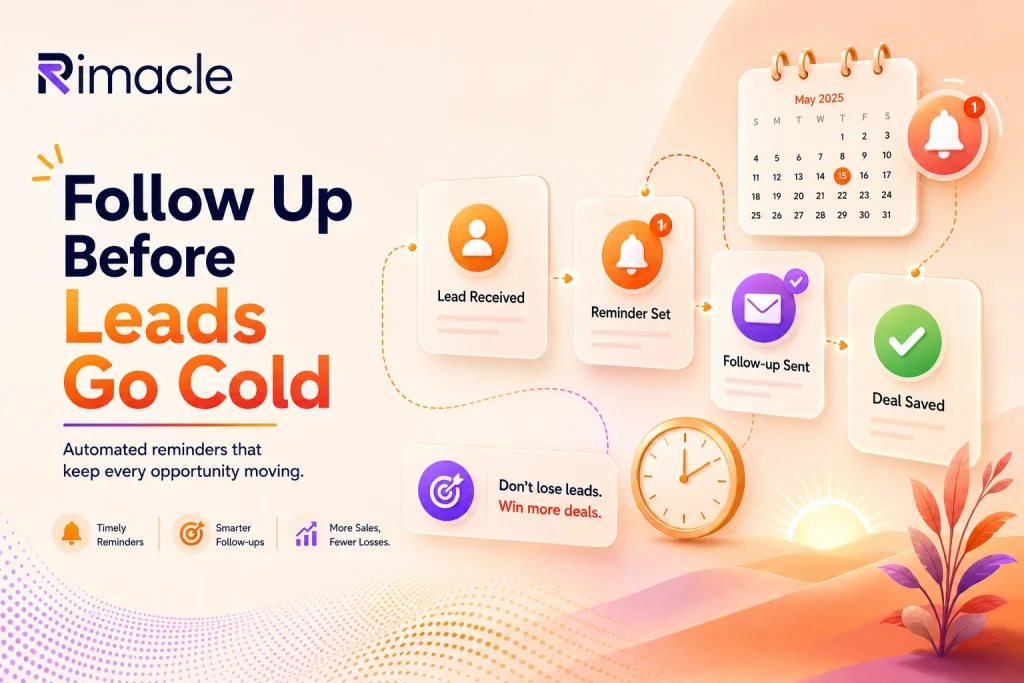

In sales, every lead has a time window. When a prospect fills a form, asks for pricing, books a demo, or shows interest in a product, the next action matters. A quick response can move the deal forward. A delayed response can send the customer to a competitor.
This is where automated reminders make a big difference.
Automated reminders help sales teams stay organized, follow up at the right time and avoid losing opportunities due to human error or busy schedules. For any growing business, they are no longer just a convenience. They are a sales productivity tool.
Why Leads Get Missed
Sales teams often handle multiple leads at the same time. Some come from websites, some from calls, some from social media, some from campaigns and some from referrals. When these leads are managed manually, it becomes easy to miss follow-ups.
A sales executive may forget to call back. A hot lead may remain unattended. A proposal follow-up may get delayed. A meeting reminder may be missed. These small gaps can turn into lost sales.
The problem is not always lack of effort. It is usually lack of a proper reminder system.
Automated Reminders Keep Every Lead Active
Automated reminders ensure that every lead has a next step. Once a lead is added to the CRM, reminders can be created for calls, emails, meetings, quotations, demos, payment follow-ups and proposal discussions.
This means the sales team does not need to remember every task manually. The system reminds them when action is needed.
As a result, leads do not go cold due to silence or delay.
Faster Follow-Ups Improve Conversions
Speed is important in sales. When a customer shows interest, they are usually comparing options. The business that responds quickly often gets the advantage.
Automated reminders help sales teams contact prospects at the right time. For example, if a customer asks for a quote today, the CRM can remind the sales person to follow up tomorrow. If a demo is completed, the system can remind the team to send the next proposal or pricing details.
Timely follow-ups show professionalism and build trust.
Reduced Dependency on Manual Tracking
Many sales teams still depend on notebooks, Excel sheets, WhatsApp messages or memory to track leads. This may work for a small number of inquiries, but it becomes risky as lead volume grows.
Automated reminders reduce this dependency. Every task is recorded in the CRM and assigned to the right person. Managers can also see which follow-ups are pending, completed or overdue.
This creates a more transparent and accountable sales process.
Better Lead Nurturing
Not every customer buys immediately. Some prospects need more time, more information or multiple conversations before making a decision.
Automated reminders help sales teams nurture such leads without being pushy. They can schedule reminders for future calls, product updates, renewal discussions, festival offers or check-ins.
This keeps the business connected with the customer until they are ready to buy.
Fewer Lost Sales Opportunities
A lost sale does not always mean the product was bad or the price was high. Sometimes, the customer was interested, but no one followed up at the right moment.
Automated reminders reduce this risk by ensuring that every opportunity receives attention. The CRM can remind the sales team before a lead becomes inactive, before a quotation expires, or before a promised callback time.
This helps businesses recover opportunities that may otherwise be lost.
Improved Team Productivity
When reminders are automated, sales teams spend less time checking what to do next. They can start the day with a clear task list and focus on meaningful conversations.
This improves productivity because every executive knows their priority leads, pending calls, scheduled meetings and follow-up actions.
Instead of working randomly, the team works with structure.
Stronger Sales Management
Automated reminders also help sales managers. They can track whether follow-ups are happening on time, which leads are being ignored, and where deals are getting delayed.
This makes it easier to guide the team, identify bottlenecks and improve overall sales performance.
A good reminder system gives managers better control without constant manual checking.
Better Customer Experience
Customers appreciate businesses that remember their requirements, call back on time, and share information when promised.
Automated reminders help sales teams deliver this experience consistently. Whether it is a first inquiry or an existing customer, timely communication makes the customer feel valued.
This improves trust and increases the chances of repeat business.
Conclusion
Automated reminders play a major role in reducing missed leads and lost sales. They help sales teams follow up on time, stay organized, nurture prospects, and maintain better customer relationships.
For businesses using CRM, automated reminders are one of the simplest ways to improve sales efficiency. They reduce manual errors, increase accountability and ensure that no valuable lead is forgotten.
In today’s competitive market, consistent follow-up can be the difference between winning and losing a deal. Automated reminders make that consistency possible.