
Introduction
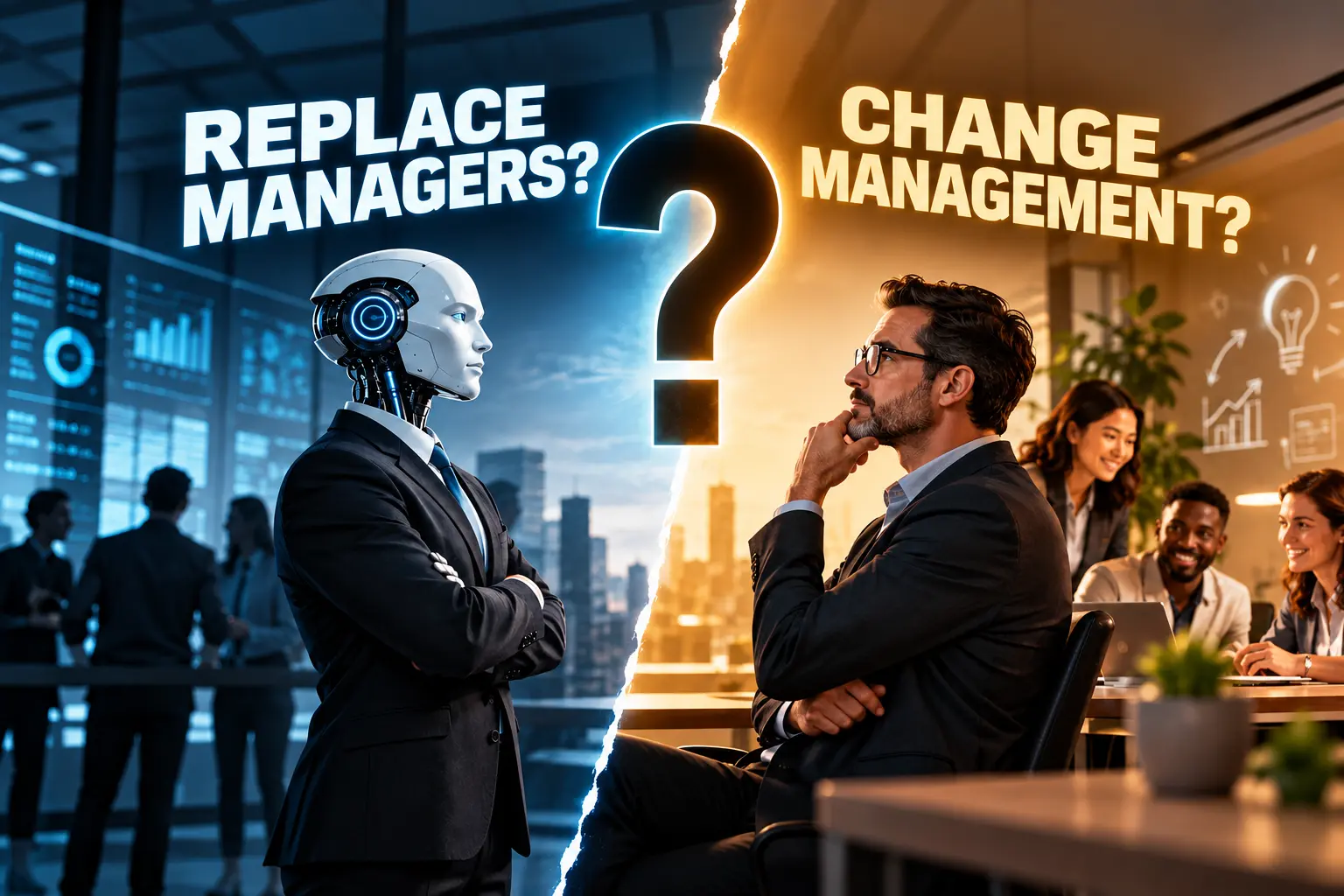
Artificial intelligence is changing how businesses plan projects, track performance, and make decisions. Tasks that once required hours of manual reporting can now be completed in minutes, raising an important question: Will AI replace managers, or will it redefine what effective management looks like?
While AI can automate routine responsibilities and analyse large amounts of data, management involves much more than tracking numbers. Leadership, communication, problem-solving, and understanding people remain essential to building successful teams.
The future of management may not be about choosing between humans and AI, but learning how to combine their strengths.
How AI Is Changing the Role of Managers
AI is already creating opportunities to simplify everyday management activities.
1. Less Time on Administrative Work
Managers often spend considerable time preparing reports, assigning tasks, tracking deadlines, and following up with employees. AI-powered tools can automate parts of these processes, giving managers more time for strategic planning and team development.
2. Faster, Data-Driven Decisions
AI can analyse project updates, performance metrics, and operational data to identify patterns and highlight potential problems. Managers can use these insights to make better-informed decisions instead of relying entirely on manual reporting.
3. Improved Team Coordination
AI-powered systems can summarise meetings, organise tasks, send reminders, and flag delays. These capabilities help managers maintain visibility into ongoing work and identify bottlenecks earlier.
However, AI-generated insights still require human judgement, especially when information is incomplete or decisions have significant consequences.
What AI Cannot Easily Replace
Despite its growing capabilities, AI cannot fully replicate every aspect of effective management.
- Leadership: Inspiring teams and creating a shared vision require human connection.
- Emotional intelligence: Understanding employee concerns and navigating sensitive conversations require empathy and judgement.
- Conflict resolution: Workplace disagreements often involve context and emotions that cannot be understood through data alone.
- Strategic thinking: Business decisions frequently involve uncertainty, competing priorities, and long-term consequences.
- Accountability: Managers remain responsible for decisions, team performance, and the ethical use of AI.
AI can provide information and recommendations, but managers must decide how to apply them responsibly.
The Rise of AI-Assisted Management
Instead of replacing managers entirely, AI is more likely to change how they work.
Imagine a project manager overseeing multiple projects. Rather than manually checking every task, the manager could use AI-powered tools to identify overdue activities, summarise progress, and highlight resource constraints.
The manager could then focus on resolving challenges, supporting employees, and keeping projects aligned with business objectives.
Business management platforms such as Rimacle, with lead management, task and project management, automation, documentation, and employee management capabilities, can help businesses organise these activities and improve operational visibility.
When routine coordination becomes easier, managers can devote more attention to the human and strategic aspects of their roles.
Skills Managers Will Need in the AI Era
As AI becomes more integrated into business operations, effective managers will need to develop new skills alongside traditional leadership abilities.
- AI literacy: Understanding what AI can do, where it falls short, and when human review is necessary.
- Critical thinking: Evaluating AI-generated recommendations rather than accepting them automatically.
- People management: Building trust, communicating clearly, and supporting employee development.
- Data interpretation: Turning reports and insights into practical business decisions.
- Adaptability: Helping teams adjust to new tools, processes, and ways of working.
The strongest managers will be those who use technology effectively without losing sight of the people behind the work.
Conclusion
AI is changing management, but replacing managers is not its only or inevitable outcome. By automating repetitive tasks, improving visibility, and supporting decision-making, AI can help managers become more effective.
However, successful leadership still depends on human judgement, empathy, accountability, and strategic thinking.
For businesses, the opportunity lies in using AI to reduce administrative workloads while empowering managers to focus on people, performance, and growth.
The future may not belong to managers who compete with AI, but to those who know how to lead with it.