
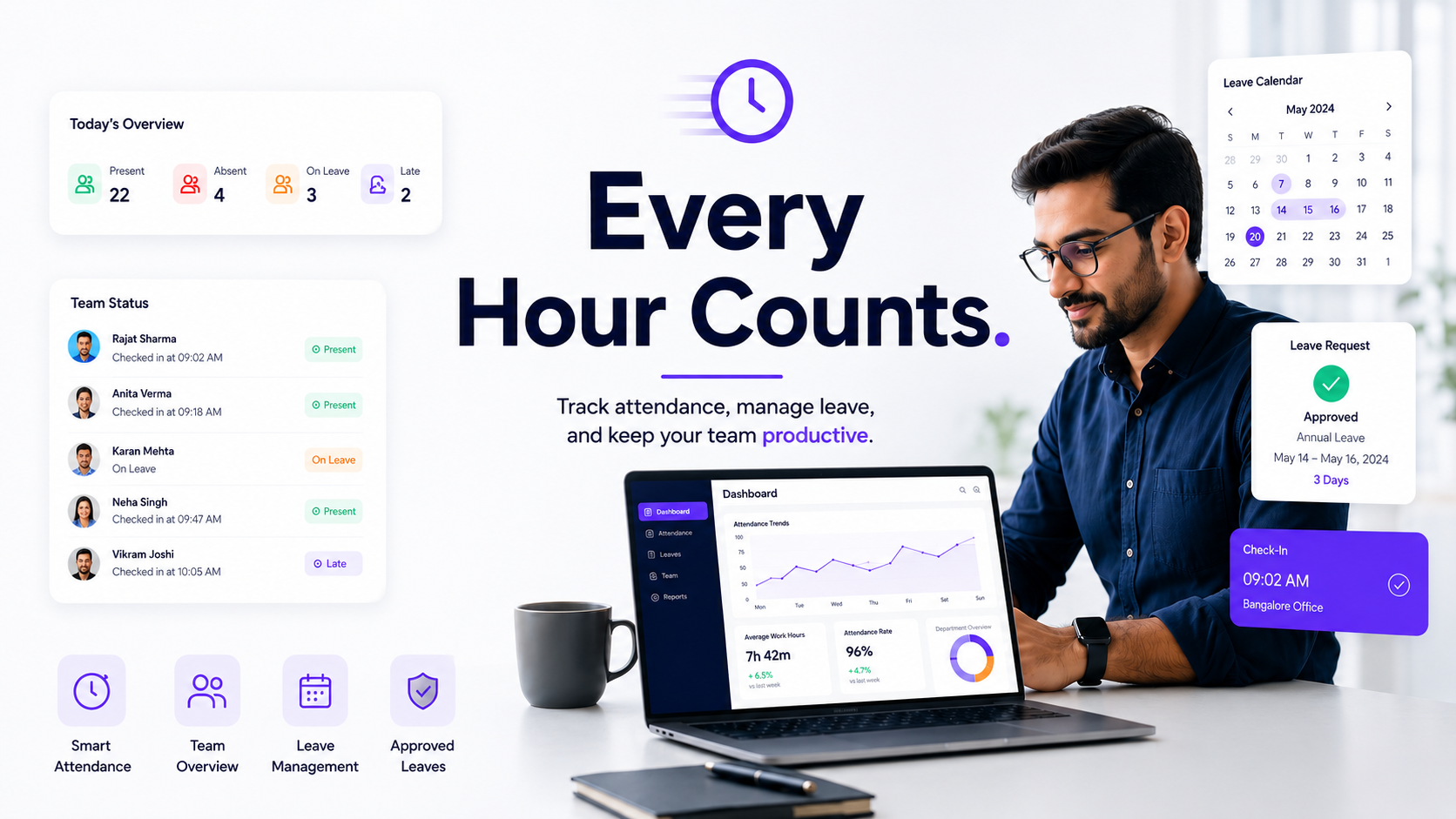
For small businesses, every working hour matters. When teams are small, even one unplanned absence, late entry or missed shift can affect daily operations. This is why employee attendance and leave tracking are not just HR tasks. They directly impact productivity, planning and business growth.
Many small businesses still manage attendance through registers, spreadsheets or manual messages. While this may work in the beginning, it often becomes difficult as the team grows. Mistakes increase, leave records become unclear and managers spend too much time checking who is present, absent or on leave.
A proper attendance and leave tracking system helps businesses manage people better, reduce confusion and improve work efficiency.
The Challenge of Manual Attendance Tracking
Manual attendance tracking may look simple, but it creates many hidden problems. Employees may forget to mark attendance. Managers may miss leave updates. Payroll teams may receive incomplete records at the end of the month.
Common challenges include:
- Incorrect attendance records
- Confusion over approved and pending leaves
- Payroll calculation errors
- Difficulty tracking late arrivals
- No clear visibility of employee availability
- Time wasted on manual updates
- Lack of accurate reports
For small businesses, these issues can reduce productivity and create unnecessary stress for both employees and managers.
Better Workforce Planning
Attendance and leave tracking helps business owners know who is available on any given day. This is important for planning daily work, assigning tasks and managing customer commitments.
When managers have clear attendance data, they can plan workloads more effectively. They can avoid assigning urgent tasks to employees who are on leave and make better decisions about shift planning or backup support.
This improves team coordination and keeps daily operations running smoothly.
Reduced Payroll Errors
Payroll accuracy depends heavily on attendance and leave data. If records are not clear, businesses may face salary calculation mistakes, payment delays or employee dissatisfaction.
A reliable tracking system helps calculate working days, paid leaves, unpaid leaves, half-days, overtime and late marks more accurately. This saves time for HR and accounts teams while also building trust with employees.
Accurate payroll is one of the strongest reasons small businesses should track attendance properly.
Improved Employee Accountability
When attendance is tracked clearly, employees become more responsible about work timings and leave planning. It creates a transparent system where everyone understands company expectations.
This does not mean creating pressure on employees. Instead, it helps build discipline and fairness. Employees know that their attendance, leaves and working hours are being recorded properly.
A transparent system reduces misunderstandings and encourages better work habits.
Faster Leave Approvals
Leave management becomes difficult when requests are shared through phone calls, messages or emails. Managers may forget to approve requests or employees may not know the status of their leave.
With a proper leave tracking system, employees can apply for leave, managers can approve or reject requests and everyone can view updated leave status in one place.
This makes the process faster, cleaner and easier to manage.
Better Productivity Insights
Attendance data can help small businesses understand team productivity patterns. Managers can identify frequent absenteeism, repeated late arrivals or departments that need better workforce planning.
These insights help business owners take timely action. Instead of guessing, they can make decisions based on clear data.
For example, if a team often faces staff shortages on certain days, the business can plan backup resources or adjust work schedules.
Saves Time for Managers and HR Teams
Manual attendance tracking takes time every day. Managers may need to check registers, update spreadsheets and answer employee queries. At the end of the month, HR teams may spend hours preparing attendance reports.
Digital attendance and leave tracking saves this time. It automates records, keeps data organized and makes reports easier to access.
This allows managers and HR teams to focus on people management instead of paperwork.
Supports Fair and Transparent Policies
Small businesses often face conflicts when leave records are unclear. Employees may feel their leaves were not counted properly or managers may not have correct records.
A proper system creates transparency. Employees can see their leave balance, attendance history and request status. Managers can view the same records before making decisions.
This helps create a fair workplace culture.
Helps Small Businesses Grow in an Organized Way
As a business grows, managing employees manually becomes more difficult. What works for a team of five may not work for a team of twenty or fifty.
Attendance and leave tracking software helps small businesses build organized HR processes early. It creates a strong foundation for future growth.
With better records, smoother approvals and accurate reports, businesses can scale without creating unnecessary confusion.
Final Thoughts
Employee attendance and leave tracking play an important role in small business productivity. They help businesses plan work better, reduce payroll errors, improve accountability and save time.
For small businesses, productivity is not only about working harder. It is also about managing people, time and resources more efficiently.
A smart attendance and leave tracking system gives business owners better control, employees more clarity and teams a smoother way to work every day.