
Managing business expenses is one of the most important parts of running a successful company. Every business spends money on operations, travel, salaries, purchases, software, marketing, utilities and daily requirements. When these expenses are not tracked properly, costs can increase without clear visibility.
Digital expense tracking helps businesses record, monitor and manage expenses in a more organized way. It replaces manual records, paper bills and scattered spreadsheets with a smarter system that gives better control over business spending.
What Is Digital Expense Tracking?
Digital expense tracking is the process of recording and managing business expenses using software or digital tools. It allows businesses to store bills, categorize expenses, approve spending and review cost reports from one place.
Instead of depending on handwritten notes or manual Excel sheets, teams can enter expenses directly into a digital system. This makes the process faster, more accurate and easier to review.
Why Expense Tracking Matters for Businesses
Every rupee spent by a business affects profit. Small expenses may look minor at first, but they can become a big cost over time.
For example, repeated travel costs, extra subscriptions, unplanned purchases or delayed vendor payments can disturb the company budget.
Expense tracking helps business owners understand where money is going. It gives a clear picture of spending patterns and helps reduce unnecessary costs.
Digital Tracking Reduces Manual Errors
Manual expense records can easily lead to mistakes. Bills may be missed. Amounts may be entered incorrectly. Duplicate entries may go unnoticed.
Digital expense tracking reduces these errors by keeping data structured and easy to verify.
Many systems allow users to upload receipts, add payment details and categorize expenses immediately. This improves accuracy and saves time during review.
Better Visibility Over Business Spending
One of the biggest benefits of digital expense tracking is visibility.
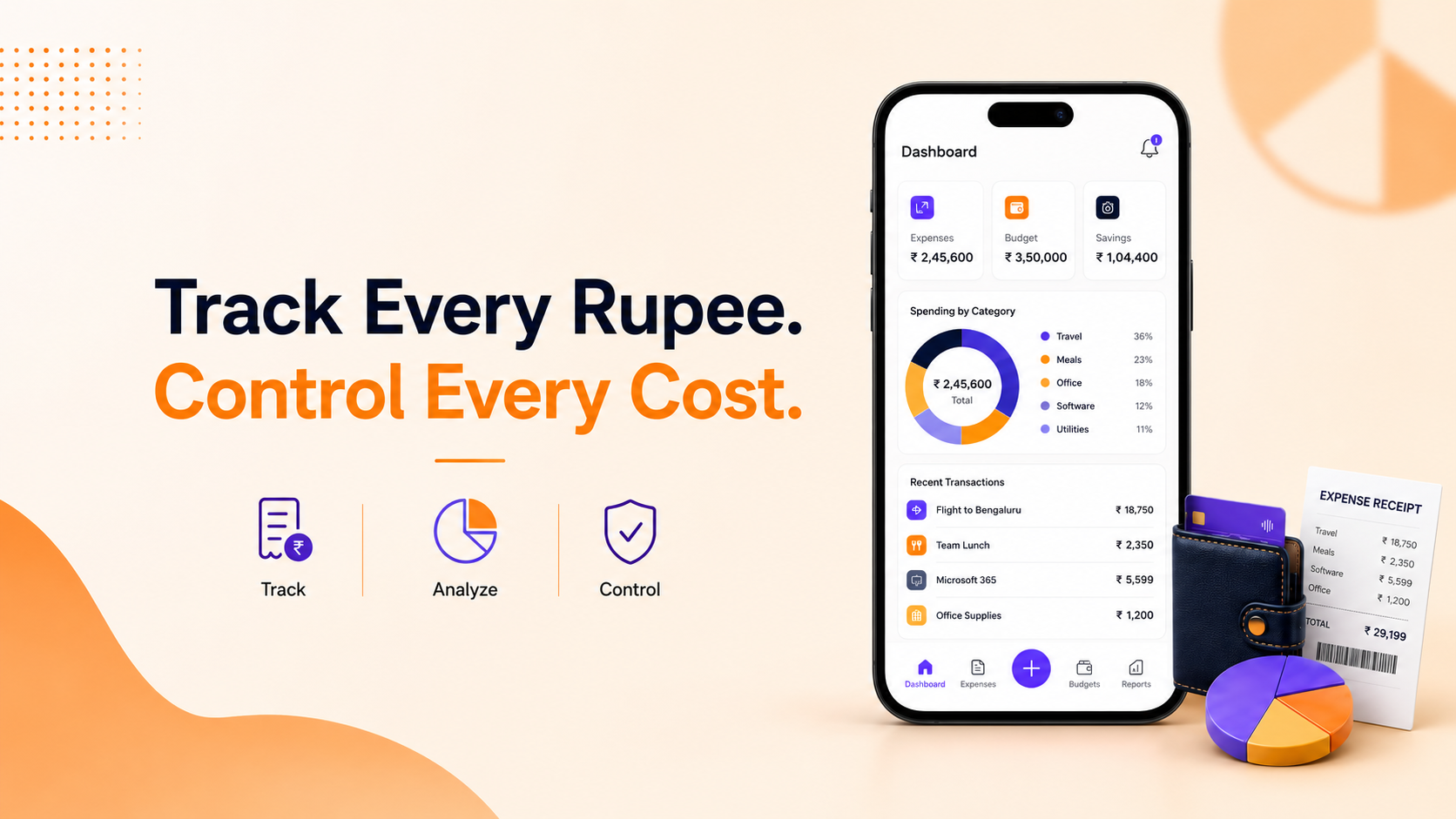
Business owners and managers can see total expenses, department wise spending, pending approvals and monthly cost trends in one dashboard.
This helps them understand which areas are consuming more money. With better visibility, businesses can make better financial decisions.
Faster Approval Process
In many businesses, expense approval takes time because bills move from one person to another manually. This can delay reimbursements and create confusion.
Digital expense tracking makes approval faster.
Employees can submit expenses online. Managers can review them quickly. Finance teams can process payments with proper records.
This creates a smoother workflow and reduces delays.
Helps Control Unnecessary Spending
When expenses are not monitored, teams may spend more than required. Digital tracking helps businesses set rules and limits for spending.
For example, a company can define travel limits, food allowance, purchase approvals or department budgets.
When everyone follows the same expense policy, unnecessary spending becomes easier to control.
Improves Budget Planning
A business can plan better only when it understands past spending.
Digital expense reports help companies compare monthly, quarterly and yearly expenses. This makes it easier to create realistic budgets.
If a business sees that a department is spending more than planned, it can take corrective action early.
Makes Tax and Audit Preparation Easier
Tax filing and audits become difficult when bills and payment records are not organized.
Digital expense tracking keeps expense data in one place. Receipts, invoices and approvals can be stored safely for future reference.
This helps finance teams prepare reports faster and reduces stress during audits or tax filing.
Supports Better Cash Flow Management
Cash flow is important for every growing business. If expenses are not tracked properly, a company may face payment pressure even when sales are strong.
Digital expense tracking helps businesses know upcoming payments, regular costs and pending reimbursements.
This allows better cash flow planning and helps avoid sudden financial pressure.
Helps Teams Stay Accountable
When expenses are recorded digitally, every transaction has a clear owner, date, category and approval status.
This improves accountability across teams.
Employees become more careful with spending because every expense is visible and trackable. Managers can also review spending behavior without confusion.
Saves Time for Finance Teams
Finance teams often spend hours collecting bills, checking entries, matching payments and preparing reports.
Digital expense tracking reduces this workload.
The system organizes records automatically and makes reporting easier. This allows finance teams to focus more on analysis and planning instead of repetitive manual work.
Conclusion
Digital expense tracking helps businesses control costs by improving visibility, reducing errors, speeding up approvals and supporting better budget planning.
It gives business owners a clear understanding of where money is being spent and where savings can be made.
For growing businesses, digital expense tracking is not just a finance tool. It is a smarter way to manage costs, improve accountability and protect profitability.